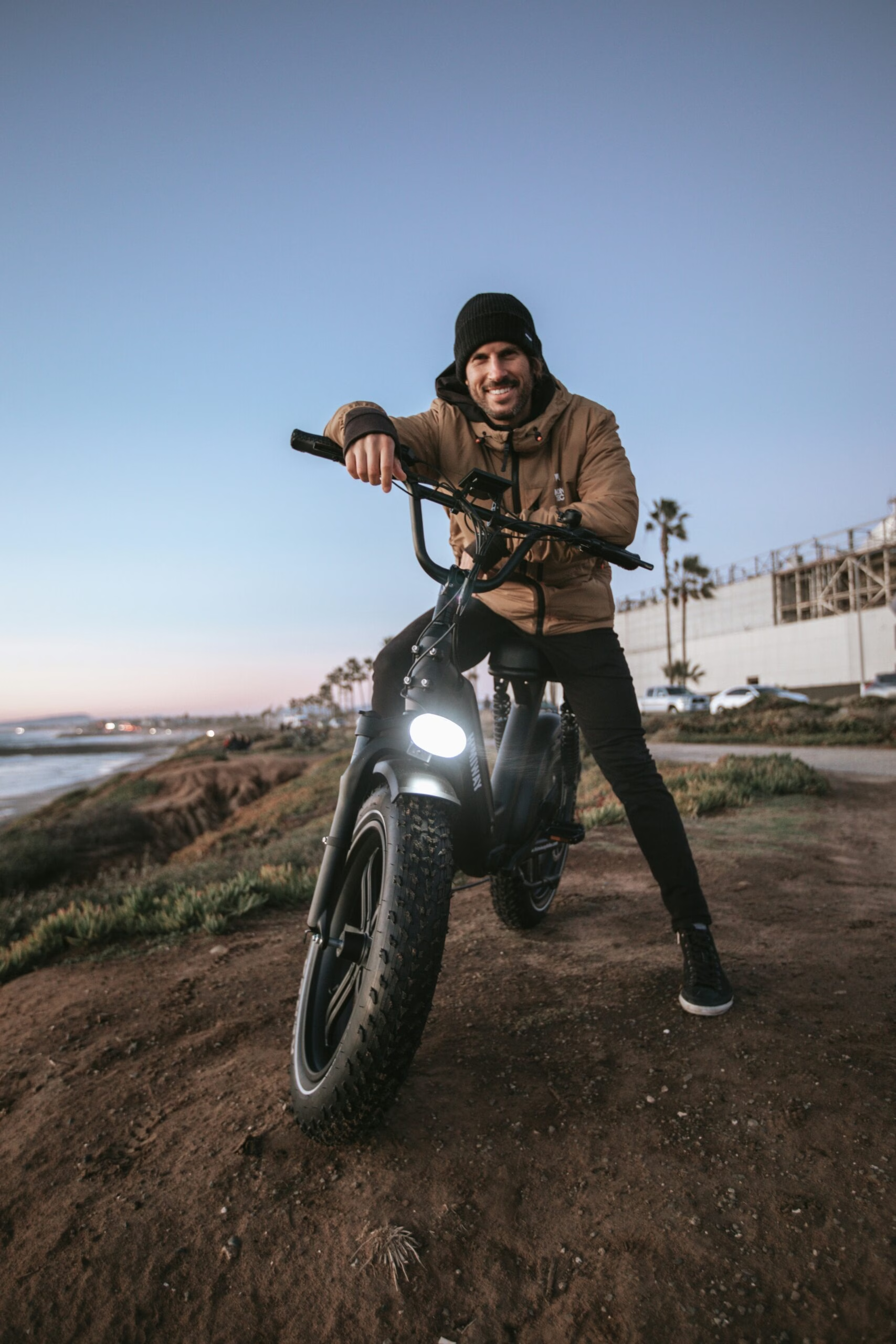
The Vammo Interview
InsightEV: Brazil is predominantly an ICE motorcycle country. Why do the new wave of electrification companies, including Vammo, think that the present is an opportunity to electrify large fleets?
Vammo: Electric motorcycles have lower Total Cost of Ownership than ICE motorcycles in Brazil, and those savings are fastest realized by commercial users. EVs are cheaper, and as such, the present is the time to act, especially as our global climate crisis accelerates.
InsightEV: Is the grid in Brazil suitable for supporting electrification? Is there sufficient energy, and how much of the grid is clean?
Vammo: The grid in Brazil is ideal for light electric electrification. On the generation front, Brazil has the cleanest electrical grid of any G20 country. This is due to not only significant hydropower capacity, but also an ongoing annual increase in deployed solar and wind power. Depending on how rainy a particular year is, the Brazilian grid ranges between 78-90% renewable. When you compare this with countries like the US, the EU, India, or Indonesia, which have much dirtier grids, it stands out that we should prioritize electrifying fleets in countries with the most renewable grids if we want to have the fastest impact on decarbonization.
On the electric vehicle infrastructure front, installing charging infrastructure can be a challenge in the country without the right understanding of market dynamics and experience. Utility operators are conservative in approving new high-load connections, making virtually all level 3 and some level 2 charging difficult. Blackouts or brownouts are common, and any operator of electric fleets needs to be prepared to ensure a reliable experience for customers. All that said, those who know how to build effective charging infrastructure will find a plethora of site hosts anxious to monetize their real estate.
InsightEV: How big is the delivery market of motorcycle riders in the largest cities of Brazil – Sao Paulo, Rio de Janeiro, and Brasilia?
Vammo: Very large and growing.
InsightEV: If delivery riders switch to electric, how big is the TCO advantage (in percentage terms)?
Vammo: The TCO advantage is significant for those driving electric and accumulating high daily km.
InsightEV: Vammo offers a rent-a-motorcycle model and battery swapping. Do you see this as the prevalent business model going forward?
Vammo: Vammo does this today, as it was the clear way to penetrate the market and grow the adoption of electric vehicles. We plan to offer our battery swapping solution in the future, yet we will also launch alternative methods for vehicle charging, such as fast charging and home charging, in the foreseeable future. How you ideally charge depends on how you use your vehicle, and so a specific solution is needed for each use case.
InsightEV: What are the early challenges that Vammo sees in moving Brazil’s two-wheeler users to electric?
Vammo: Unlike in India, China, Indonesia, and across the countries of Africa, the Brazilian government does zero to incentivize or promote the adoption of electric 2-wheelers. This means that electric, with its nascent supply chains and small scale, must compete head-to-head with a century-old ICE industry selling millions of vehicles a year without any sort of support. In most industries and most countries, this challenge would be recognized, and some sort of early government support for the fledgling industry would materialize. Unfortunately, the Brazilian government, despite the disproportionate de-carbonization impact that the electrification of the Brazilian motorcycle fleet could have relative to other countries with dirty grids, takes no steps to support the electrification of two-wheelers. Brazil has extremely high import duties on goods. Brazil would not need to offer subsidies, such as India does through FAME, to stimulate the adoption of EVs. The federal government could merely reduce import duties for a short period of years so that the industry could have time to learn how to stand on two feet. Then, duties re-instituted several years later, Brazil would have built a more technologically advanced Electric 2 wheel industry, and be able to capture taxes and future duties generated from this new industry.
InsightEV: We notice that Brazilian two-wheeler riders favour dual-purpose/trail/dirt bikes. We estimate that 27% of all motorcycles sold were of this format. Do you see this as a challenge to electrification?
Vammo: It really depends on the city that you are in. We see all sorts of interest across form factors.
InsightEV: The global move to electric has been driven by electric scooters until now. Brazil is not a scooter country, with only 8% of users buying scooters last year. In this context, do you feel that Vammo (and other players) have difficulty finding the right vehicle partners to develop electric motorcycles?
Vammo: LATAM is undeniably a motorcycle form factor first market. That said, there are pockets of customers seeking a scooter form factor, albeit a much smaller market. We think that the Latin American market is massive enough (Brazil, Colombia, and Mexico are all in the top 10 largest motorcycle markets globally) that, with the right electric vehicle solutions brought to market, the % of electric vehicles sold per year can finally start to pass the 1% mark.
Focus: Brazil
 InsightEV – Global Electric Mobility
InsightEV – Global Electric Mobility
InsightEV – Global Electric Mobility