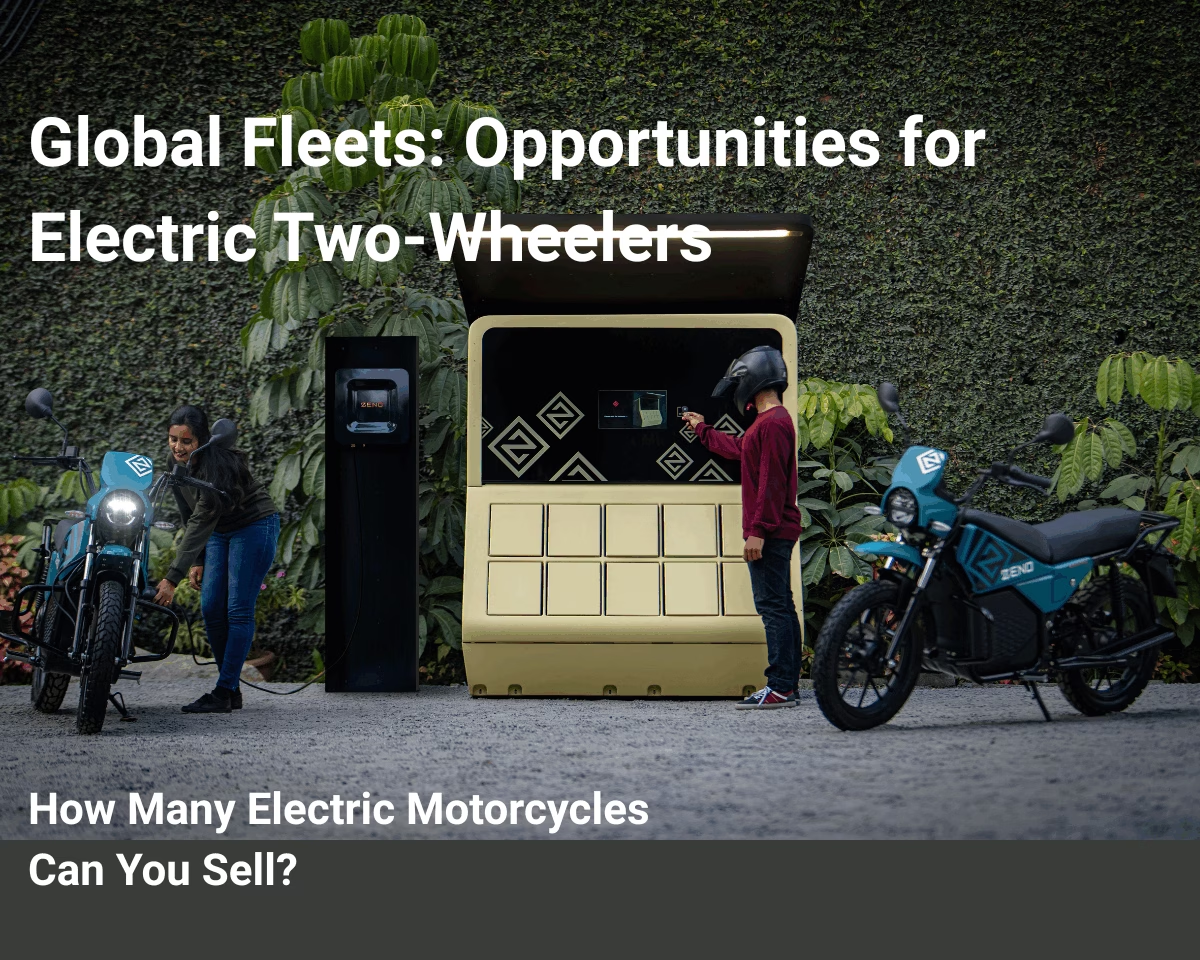
The Global Fleets: Opportunities for Electric Two-Wheelers (2025 edition) is a syndicated research study by InsightEV. It evaluates and analyses key markets worldwide for vehicle fleet deployment. These fleets may include gig workers delivering food or employed in quick commerce, e-commerce, or some other delivery format. The coverage also includes motorcycle taxis, parcel delivery, and vehicles used by small fleets like restaurants and local postal services.
At present, these fleets are largely Internal Combustion Engine (ICE) powered, but cost optimisation of operations, environmental concerns, ESG mandates, and better fleet management systems would drive a shift to electric. This is a megatrend in the making, and we assess the changes and the opportunities this brings.
The TWAR Ratio
The TWAR ratio is the price of the best-selling two-wheeler in any geography (in almost all cases, it is a sub-125cc ICE scooter/motorcycle) pegged against the GDP per capita of that country on a PPP basis. In simpler terms, it is a relative score of how affordable two-wheelers are in that country. The more affordable they are (lower TWAR), the higher the barrier against electrification.
The FAR Ratio
The FAR ratio is the price of gasoline in the geography pegged against the GDP per capita of that country on a PPP basis. In simpler terms, it is a relative score of how affordable fuel is in that country. The more affordable it is (lower FAR), the higher the barrier against electrification.
What does the Report contain?
- The report evaluates and analyses 74 geographies (cities/countries) – 22 in Asia, 8 in North America, 16 in Europe, 14 in Africa, 11 in South America, and 3 in Australia.
2. Together, the geographies represent about 2.3 billion people, and more than 257 million motorcycles in operation.
3. The selected geographies represent an estimated 31.5 million delivery riders today, a number that is forecasted to grow to 44.7 million over the next five years.
4. In every geography we looked at the delivery platforms, their relationship with the riders, who owns the vehicles, who manages the riders, and the most important factors that would impact the future choice of vehicle.
5. We evaluate every geography on the TWAR and FAR ratio to see how conducive they are to electrification. Then, considering local factors, we forecast the five-year volumes for that geography.
6. This study profiles 32 leading delivery platforms globally.
7. The report also profiles 31 manufacturers/operators who are responsible for supplying the vehicles.
Who should purchase the report?
You are a manufacturer validating your forecast assumptions and planning your CAPEX for the near and mid-term.
If you are a startup targeting the gig economy market, then this report validates your TAM/Volume assumptions.
If you are an investor, this report draws a great landscape of the global fleet market and identifies the most important markets where you may want to target your investment.
If you are a cell supplier, then this report draws a great volume profile of demand in the coming five years in every geography.
Same, if you are planning to assemble swappable packs, are a swapping station supplier or a motor manufacturer.
If you are a delivery platform, the report’s wide landscape will help you identify patterns and benchmark yourself against others, from a delivery perspective.